
Addressing Old Dance Injuries with the Alexander Technique
Do old dance injuries still affect the way you move? Perhaps your shoulder tightens when you reach for something. Maybe your ankle braces itself when you take a step. Perhaps your body has been carrying the story of an old injury for years.
In this video, I'll show you how I approach old injuries through the lens of the Alexander Technique. Instead of pushing through pain or giving up altogether, you'll learn how to:
Notice the protective patterns that arise around an injury
Bring awareness back to your whole body
Move with greater ease, curiosity, and freedom
This practice is especially helpful for highly sensitive former dancers who have spent years learning to ignore pain and keep going.
If you’d like to go deeper, I offer free consultations in which we can discuss what you need and how to apply this work to your body and your movement.
A transcript of the video is below if you’d prefer to read rather than watch and listen.
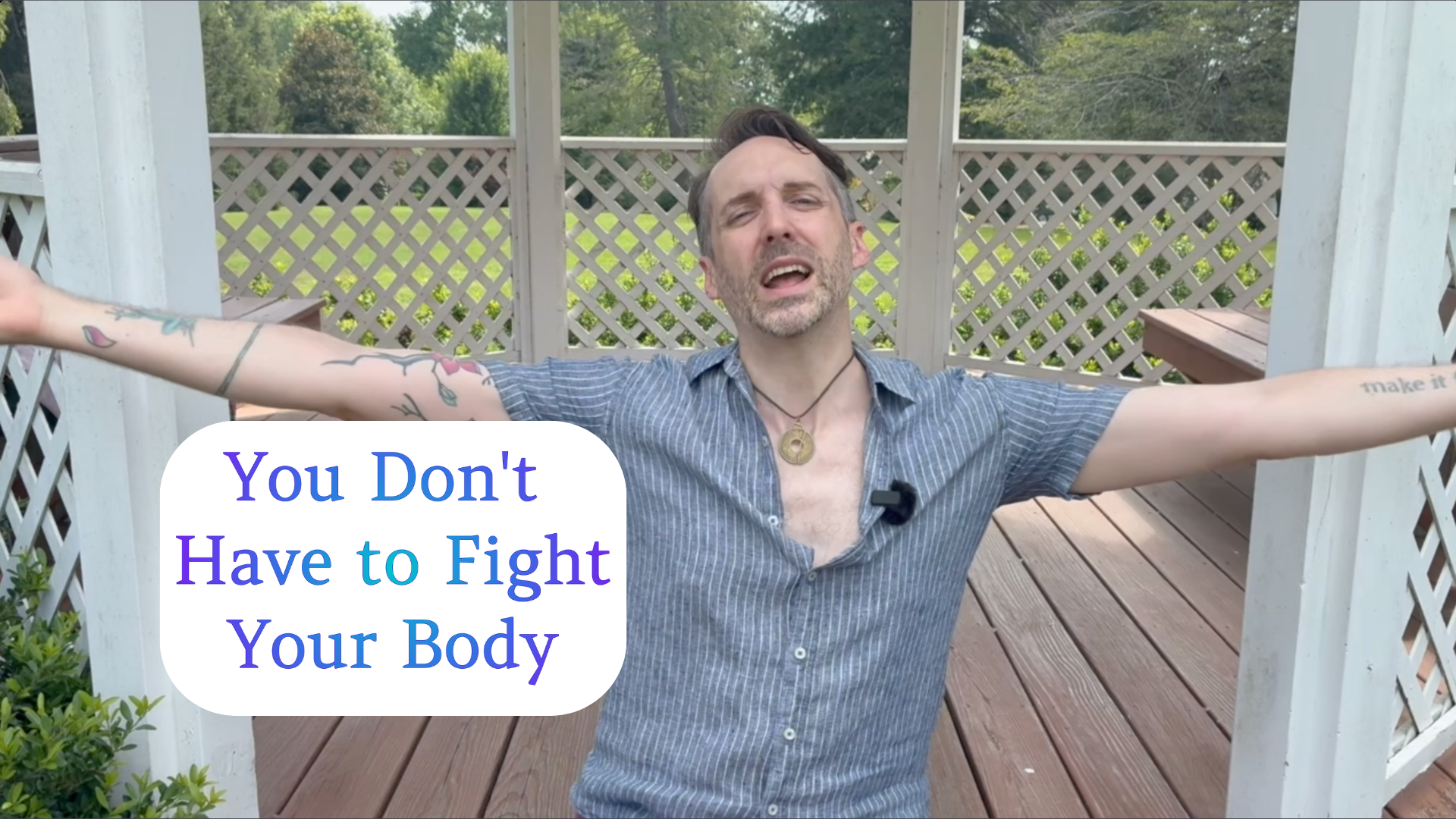
Hello, friend.
Let's talk about injuries and let's work with injuries, especially old injuries. They could be from dance. They could just be from life. And how they show up in your body and how you respond to them in your body and how you can change that response. So, if you have an old injury, sometimes it might whisper to you that it's there. Sometimes it might shout at you that it's there. And what happens in your body when that injury starts to speak? There tends to be a whole response that happens that you might not even be aware of.
So, let's say there's an old injury to your shoulder and you're about to pick something up. If I can slow down, what happens in the body? something like you walk to the book, you're about to pick up the book, your arm begins to move, but even before that happens, there's a bracing that begins to happen in your body. There's a bracing in the shoulder. There's probably a bracing in the other shoulder as well. The mind gets a little drawn into the shoulder. And it might not be literal words. Could be, but often times it's not. But there's some kind of thought in there, a belief that, ooh, this is going to hurt.
Now, if we bring that into your awareness, if you were about to pick something up and you told yourself, "This is going to hurt to do this," and you believed it, your body will pull away from it, which would be a smart thing to do. If someone told you, "Don't do that. It will hurt." Okay, I'm going to pull away from that. I don't want to do that. And then we do it.
And particularly if you're highly sensitive and a dancer, you know, we when we're dancing, oh, there's some pain. Well, I keep going. That's part of the movement. That's part of the dance. That's part of the technique. The pain is there. I keep going. And then we trained ourselves to live that way as well without it necessarily even knowing it.
So, when there's an injury, we don't want to keep going. We don't want to give up either. We don't want to abandon it. So how do we work with it? If it's an injury that does need you to fully stop, it's a good idea to listen to that. If it's an injury that you can still move with, okay, how do we work with that? So, let's go back to the shoulder injury. And I'm going to raise my arm. Before I do it, that pattern has already come out. that guarding pattern. Then if I try to move on that, it's like I'm trying to hold still and move at the same time. And even if there's no injury, that's not the best way to move. That doesn't feel so great. With an injury, it's even worse.
So, let's stop. Let's change that pattern. I'm about to lift my arm. There's that injury. I know about it. Okay. Just a minute.
Okay. When we get lost in that injury, the rest of the body somewhat disappears. So, we want to bring it back. You still have a head.
So, nice to have a head way up here. You're breathing. That's already happening. That breath is there.
Yeah. Nice to have breath. You have two shoulders, not just the one. Two. Oh, yeah. Oh, I have two shoulders. Oh, for a second I just thought I had the one. The injured one.
Okay, the body is starting to come back. Okay, I get to still have a head. Now I'm I want to raise that arm. I want to raise that arm. Okay. I'm not going to get too lost in the injury, but I'm not going to do it and hope it works out. Instead, can I come back to my whole body?
Get to still have a head. I get to still breathe as my arm moves.
And as I'm moving, if I run into pain, I don't have to just keep going. No,
that's something that we learned in the past. But now you can stop. And if you encounter pain, guess what? That old pattern, that guarding action will come back in again. Even if you don't notice it, that's why we stop.
Where are you? Oh, back in my shoulder. All right. You still have a head. Oh, yeah, I do. The breath is still there.
So, if you have an injury that you know about, an old injury that's been interfering with the way you move through your day, that's been tripping you up, that keeps rearing its head.
The next time you're about to do something that involves that part of your body, stop.
Notice how your body is suddenly guarded against what you're about to do. That's good. It's trying to protect you. But then if we push through, that's called pain.
So, stop.
Notice the guarding. Come back to where you are. What is already here? Your head.
The breath.
Are you standing? Are you sitting?
Okay. You start to let go of that guarding and then you're a little freer to move.
Let yourself move from there rather than from the place of this is going to hurt.
Play around with that. And as always, if you need some help, that's what I'm here for. Till we meet again, take care.